| Epoch | Learning Objective | Core Topics / Activities | Expected Outcome |
|---|---|---|---|
| 1. Introduction to TensorFlow & Setup | Understand TensorFlow basics and installation | TensorFlow installation, GPU setup, tensor operations, eager execution | TensorFlow environment ready and basic operations understood |
| 2. Tensor, Variables & Operations | Learn about TensorFlow data structures | Tensors, Variables, Rank, Shape, Broadcasting, Basic math ops | Ability to manipulate tensors effectively |
| 3. Automatic Differentiation & GradientTape | Understand backpropagation in TensorFlow | GradientTape, computing gradients, optimization basics | Ability to compute and apply gradients manually |
| 4. Linear Regression & Optimizers | Build and train a simple regression model | tf.keras basics, loss functions, GradientDescentOptimizer | Implemented first end-to-end ML model |
| Evaluation criteria | Requirement | Weight (%) |
|---|---|---|
| A. Understand Tensor & Gradient | Explain the role of Tensor and Gradient in training | 20% |
| B. Reasonable model structure | The model has full Input, Hidden, Output, Activation | 25% |
| C. Reasonable training results | Loss gradually decreases, Accuracy/Loss report correctly | 25% |
| D. Explain results & clean code | Clear code, with comments, understand the meaning of the functions | 20% |
| E. Report results | Has a reasonable Loss graph or output description | 10% |
| Meets the requirements when: Score ≥ 70% and the model runs successfully |
| Epoch | Learning Objective | Core Topics / Activities | Expected Outcome |
|---|---|---|---|
| 5. Building Neural Networks with Keras | Create neural network models using Keras API | Sequential model, Dense layers, activation functions, compile & fit | Built a working neural network for basic classification |
| 6. Image Data Preparation | Handle real-world image datasets | ImageDataGenerator, rescaling, augmentation, splitting data | Dataset ready for training CNN |
| 7. Convolutional Neural Network (CNN) Basics | Build and train CNNs for image recognition | Conv2D, MaxPooling2D, Flatten, Dropout | Built CNN achieving 80–85% accuracy on training data |
| 8. Transfer Learning with Pretrained Models | Improve accuracy and efficiency | VGG16, MobileNetV2, feature extraction, fine-tuning | Model accuracy improved >90%, reduced training time |
| Evaluation Criteria | Requirement Description | Weight (%) |
|---|---|---|
| A. Data Pipeline | Data is processed correctly (rescale, augment, split appropriately) | 20% |
| B. Model Architecture | CNN model has reasonable structure, standard activation | 25% |
| C. Training & Validation | Successful training, clear accuracy/loss graph | 25% |
| D. Transfer Learning Implementation | Correctly apply pre-trained model techniques | 20% |
| E. Reporting & Analysis of results | Describe why the model works well/badly | 10% |
| Meets requirements when: Accuracy ≥ 85% and score ≥ 70% total |
| Epoch | Learning Objective | Core Topics / Activities | Expected Outcome |
|---|---|---|---|
| 10. Model Saving & Loading | Save and reuse models | - model.save() and tf.keras.models.load_model()- SavedModel, H5, TF Lite formats |
Save/restore models successfully |
| 11. Flask API for Prediction | Create API to serve models | - Flask server - Endpoint /predict to upload images- Predict and return JSON results |
Flask API runs and returns accurate results |
| 12. TensorFlow Serving & Optimization | Optimize & deploy real products | - TensorFlow Serving via Docker - Quantization, Pruning - Real-time inference demo |
Models can run outside the dev environment |
Deployment Functionality (40%) – Flask API correctly predicts and handles requests
Integration & Design (30%) – Clean integration between TensorFlow, Flask, and frontend
Testing & Reporting (30%) – Demonstrated end-to-end tests and user documentation
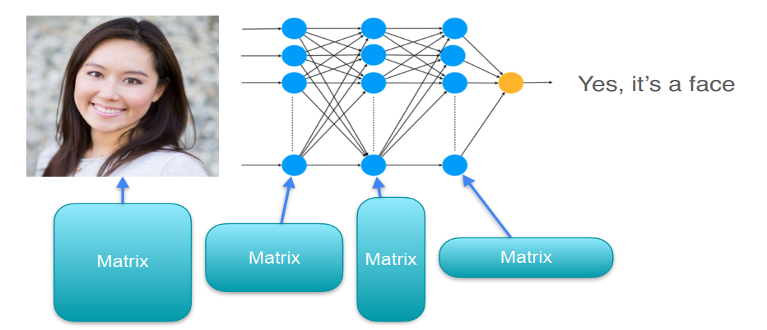
Trong ML, hầu hết các mô hình đều được mô tả bằng linear algebra:
Ví dụ:
\[y = w_1 x_1 + w_2 x_2 + \cdots + w_n x_n + b\]
Đây chính là một systems of linear equations (mô hình linear regression cơ bản).
Ví dụ:
Ví dụ::
⇒ We can infer: “Nam is taller than 160 cm.”
\[\begin{cases} A > B \\ B = 160 \end{cases} \quad \Rightarrow \quad A > 160\]Ví dụ (linear regression với 2 điểm dữ liệu):
\[\begin{cases} 2x + y = 5 \\ x - y = 1 \end{cases}\]Giống như trong ML, bạn có nhiều mẫu huấn luyện, và bạn cần tìm nghiệm (weights) phù hợp với tất cả.
Ví dụ:
⇒ Kết hợp: “The ground will be wet today.”
Trong ML: mô hình học từ dữ liệu, rồi dự đoán cho input mới.
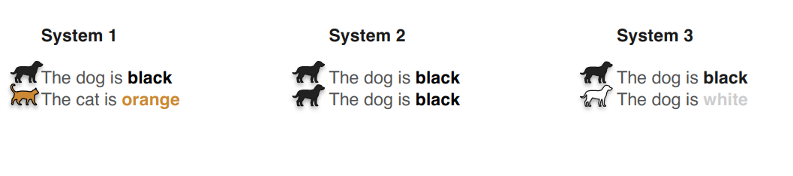
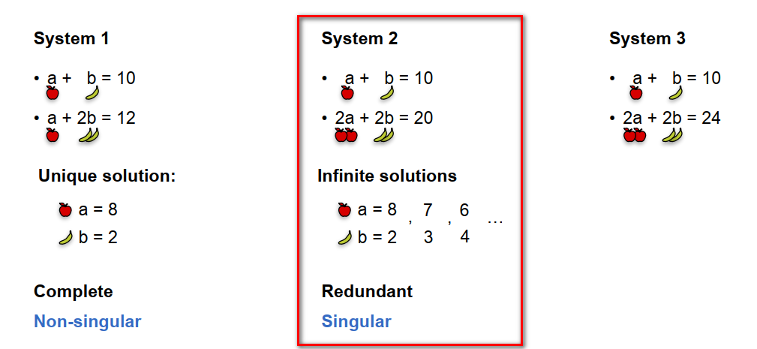
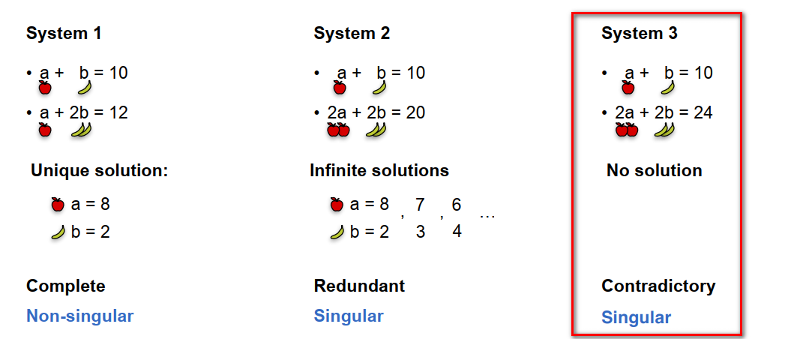
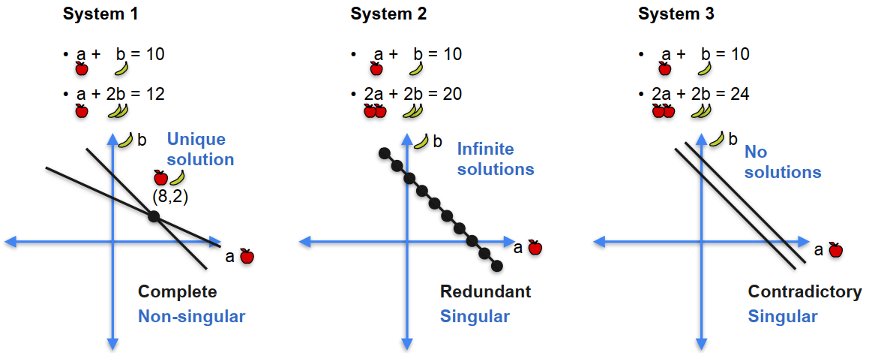
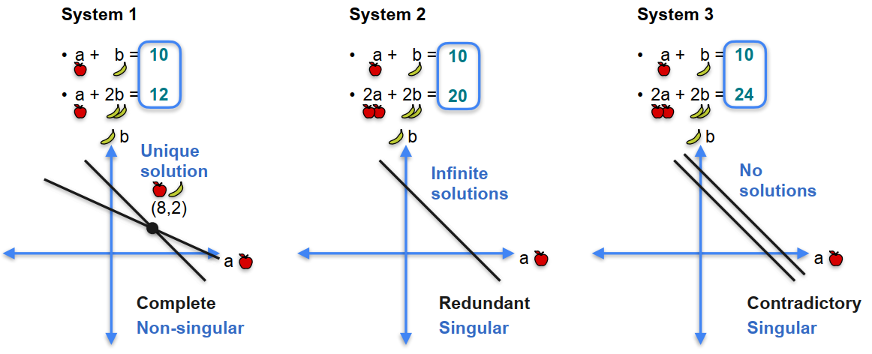
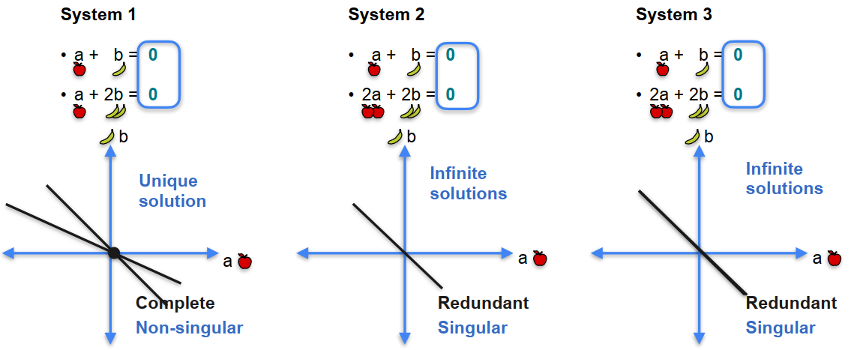
Hệ thống này chứa nhiều thông tin như sentences và được gọi là a complete system.
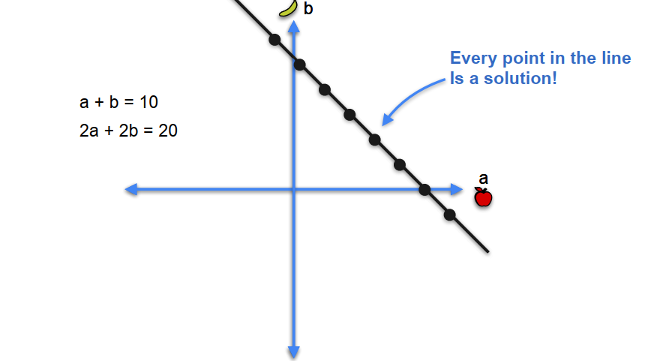
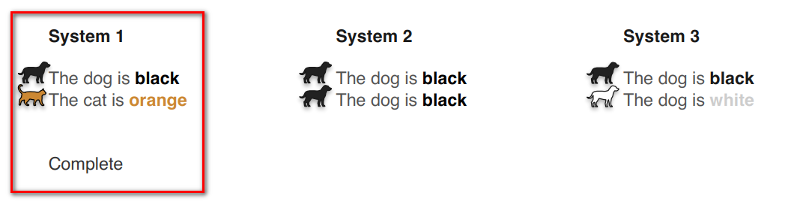
The sentences lặp lại và do đó hệ thống này được gọi là dư thừa (redundant).
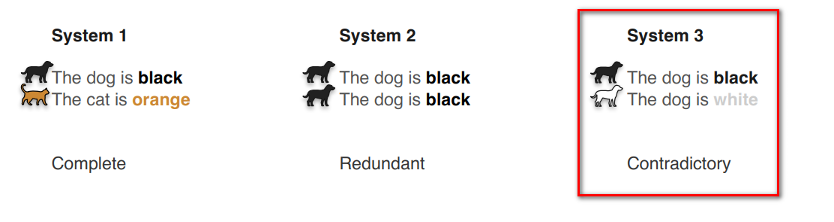
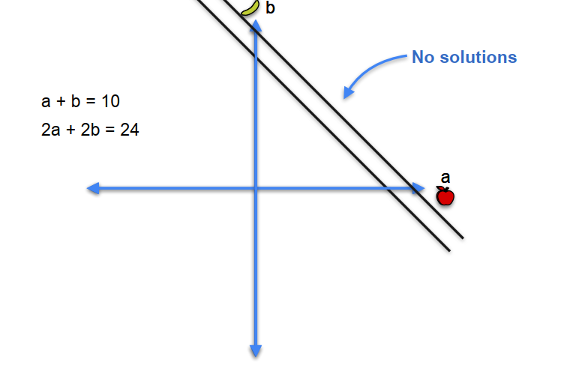
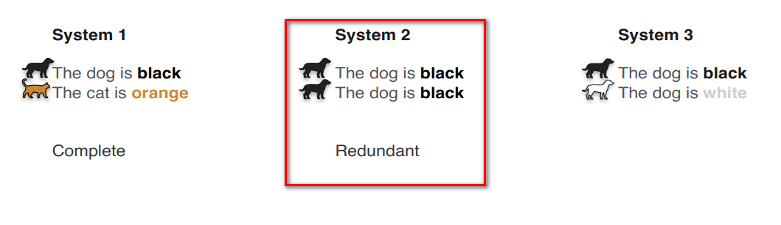
Hệ thống này được gọi là contradictory system vì con chó không thể vừa đen vừa trắng cùng một lúc, hãy nhớ rằng chúng ta có một con chó và nó chỉ có thể có một màu.
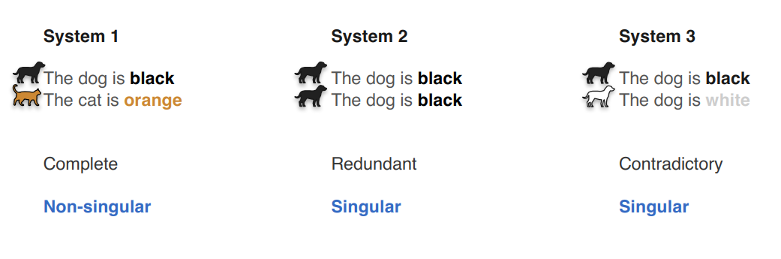
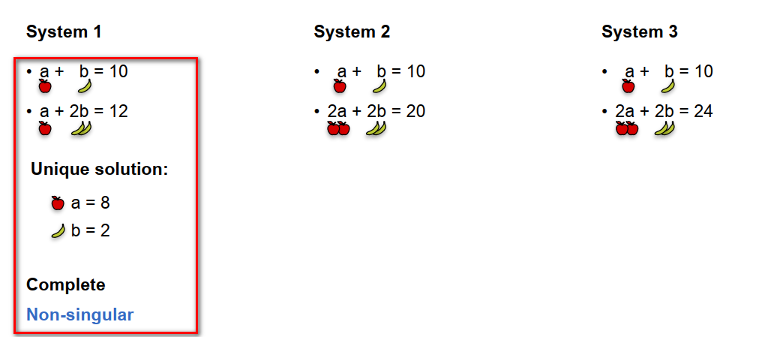
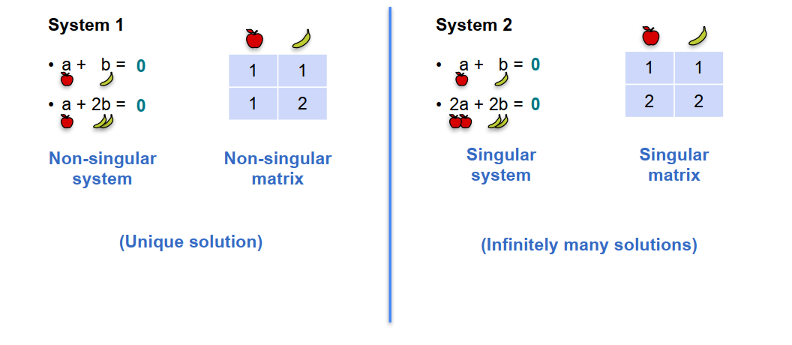
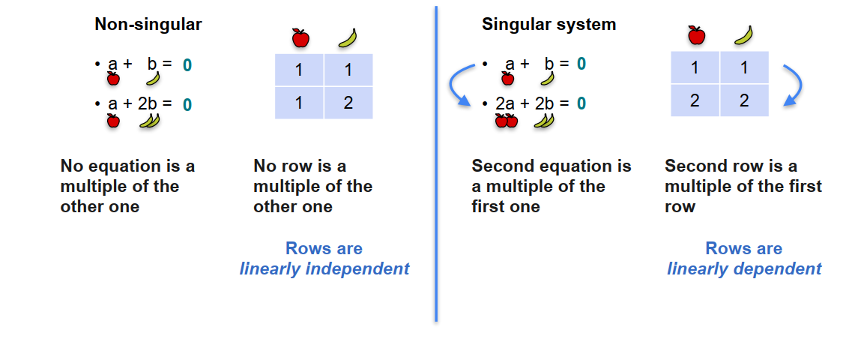
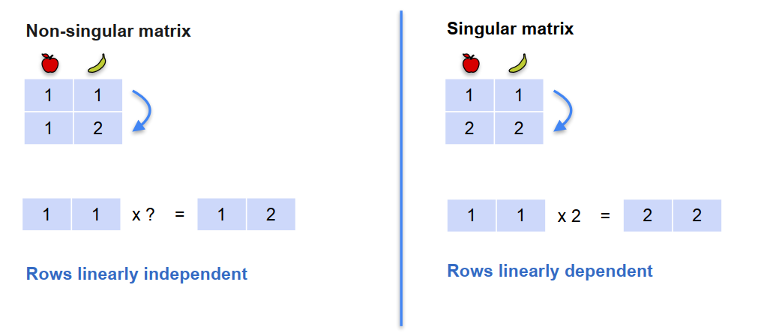
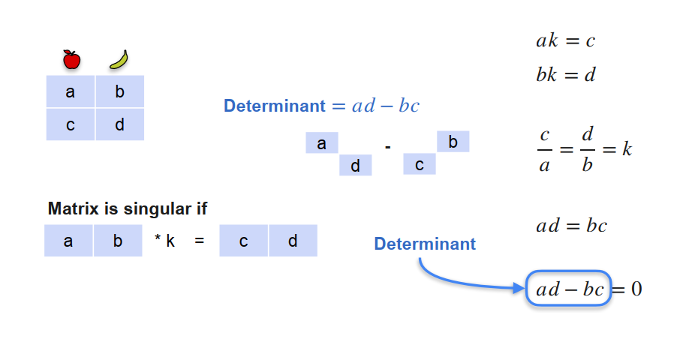
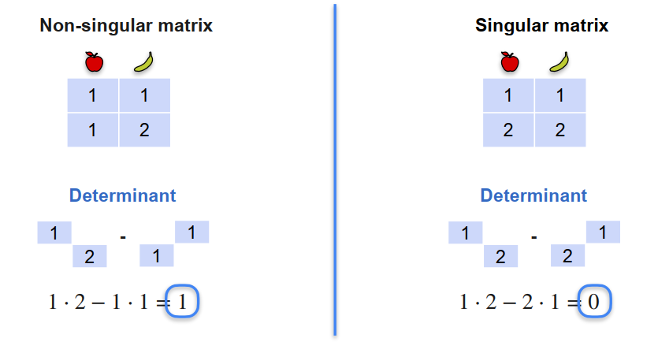
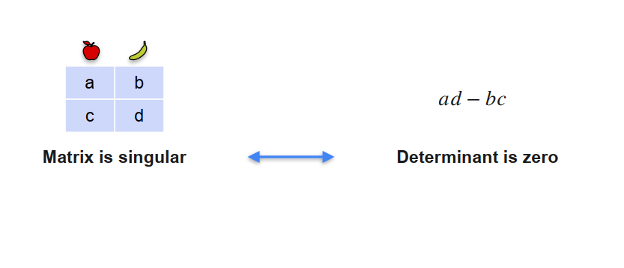
Non-singular: hệ có nghiệm duy nhất (complete system). Singular: hệ có vô số nghiệm (redundant system) hoặc hệ vô nghiệm (contradictory).
Quy tắc chuyển đổi
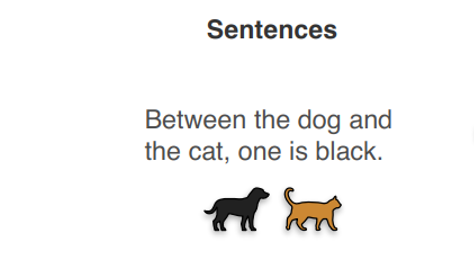
.png)
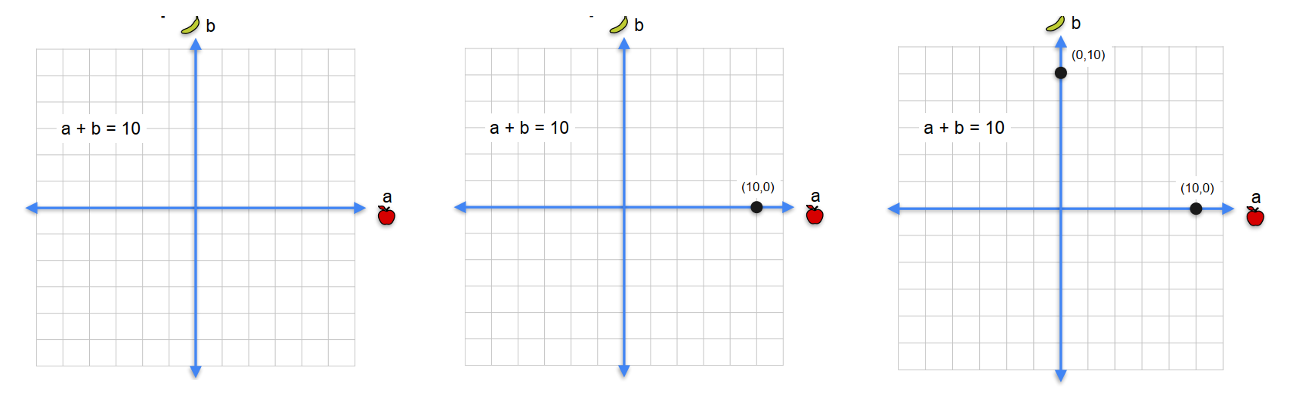
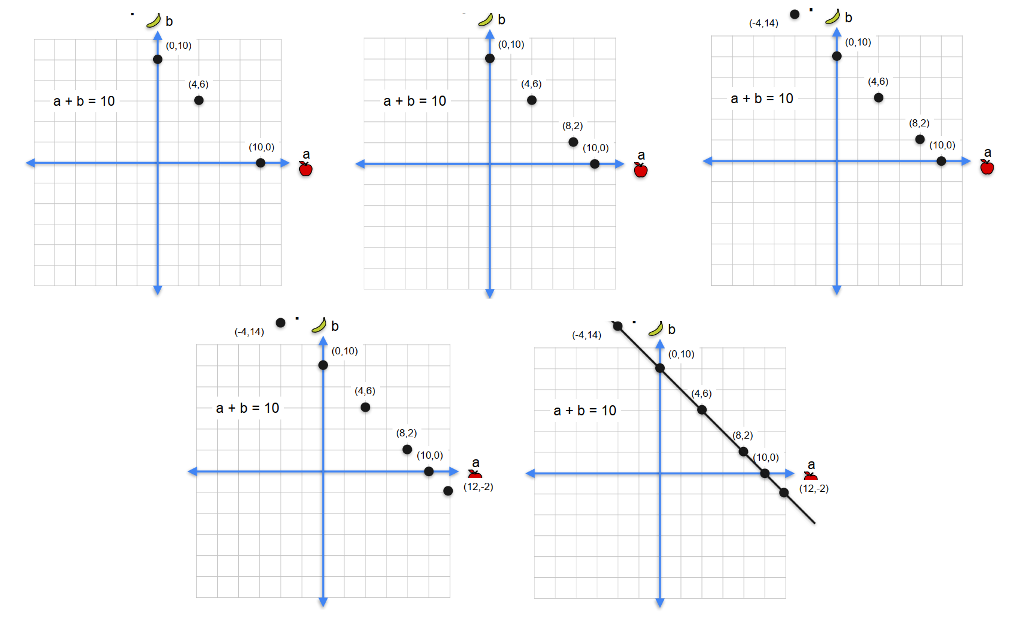
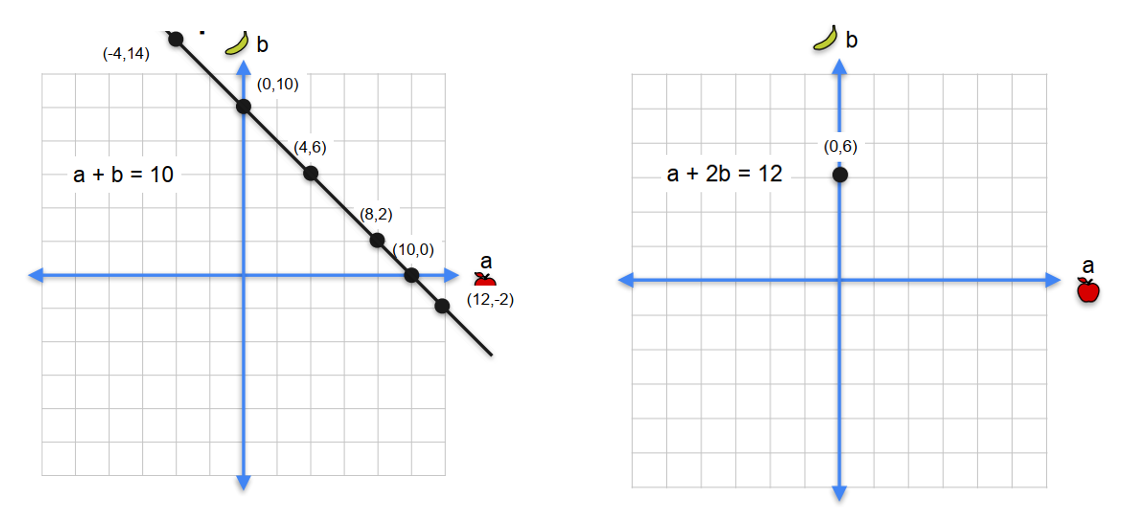
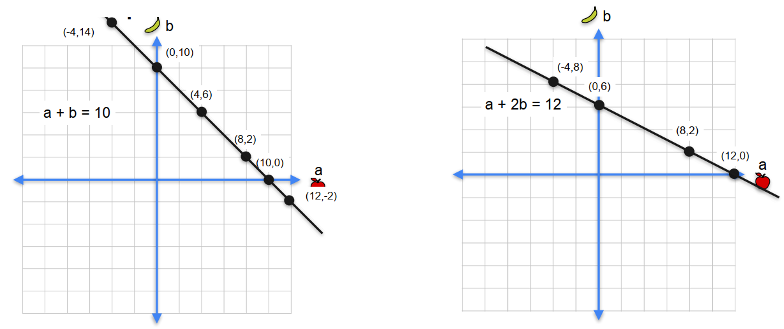
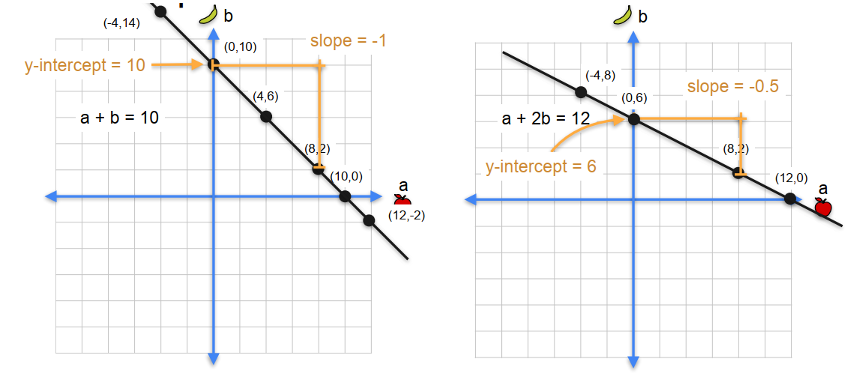
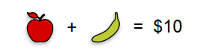
Câu: “The price of an apple an panana is $10”
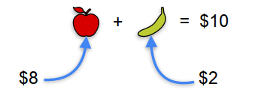
Một phương trình, hai ẩn → vô số nghiệm.
Ví dụ nghiệm:
Bổ sung câu để đủ nghiệm duy nhất: “The apple costs twice the banana.” → a = 2b
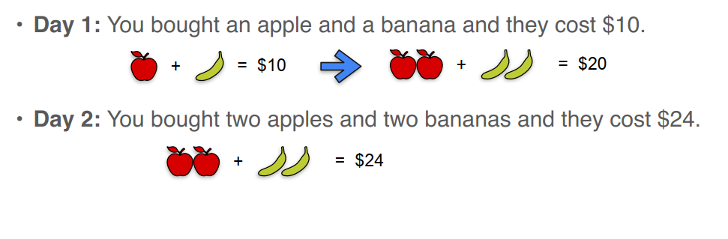
\[\begin{cases} a + b = 10\\[4pt] a - 2b = 0 \end{cases} \quad\Rightarrow\quad \text{solve: } 2b + b = 10 \Rightarrow b=\tfrac{10}{3},\; a=\tfrac{20}{3}.\]You go two days in a row and collect this information:
Question: How much does each fruit cost?
Solution:
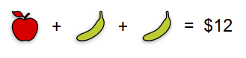
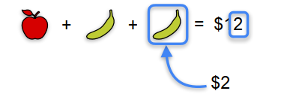
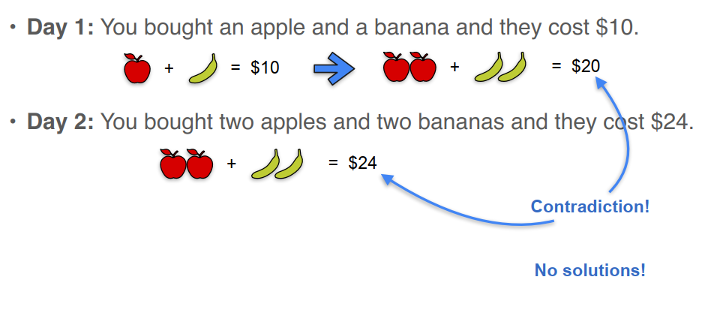
You go two days in a row and collect this information:
Question: How much does each fruit cost?
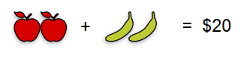
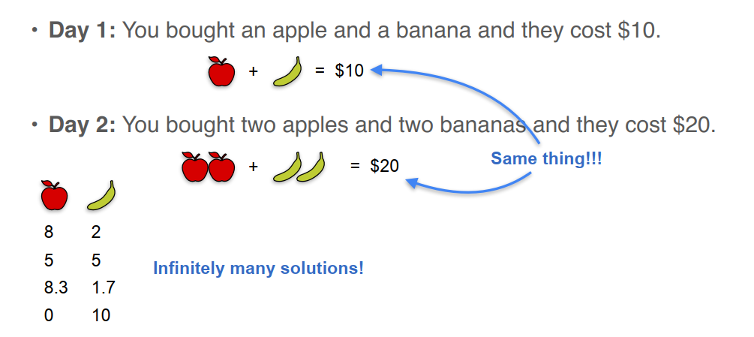
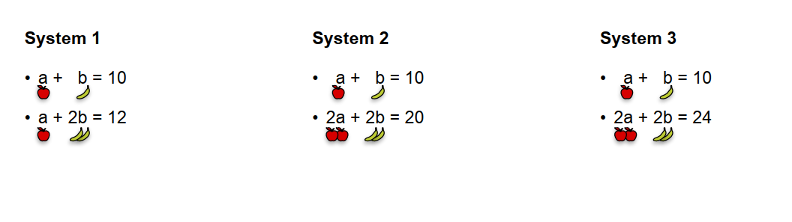
You go two days in a row and collect this information:
Question: How much does each fruit cost?